
Last updated November 14, 2026
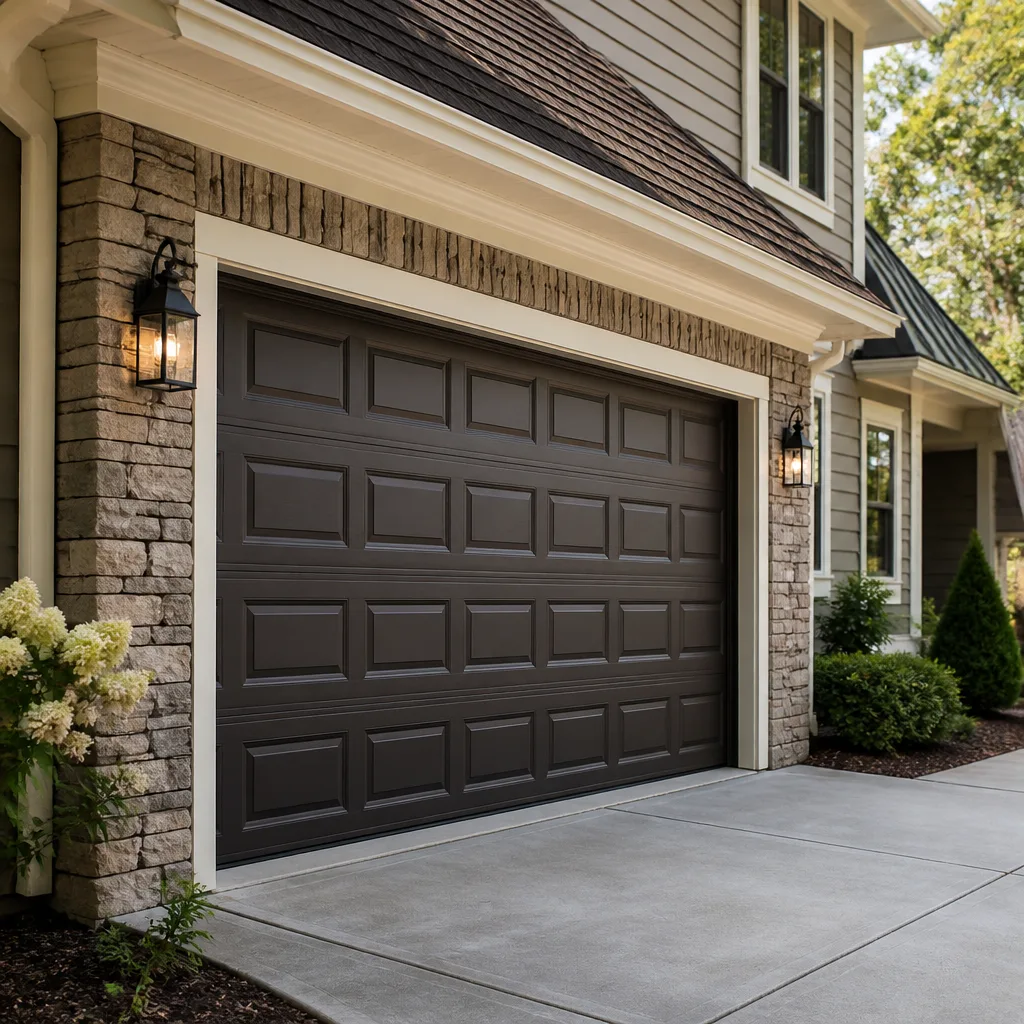 Raised-panel steel
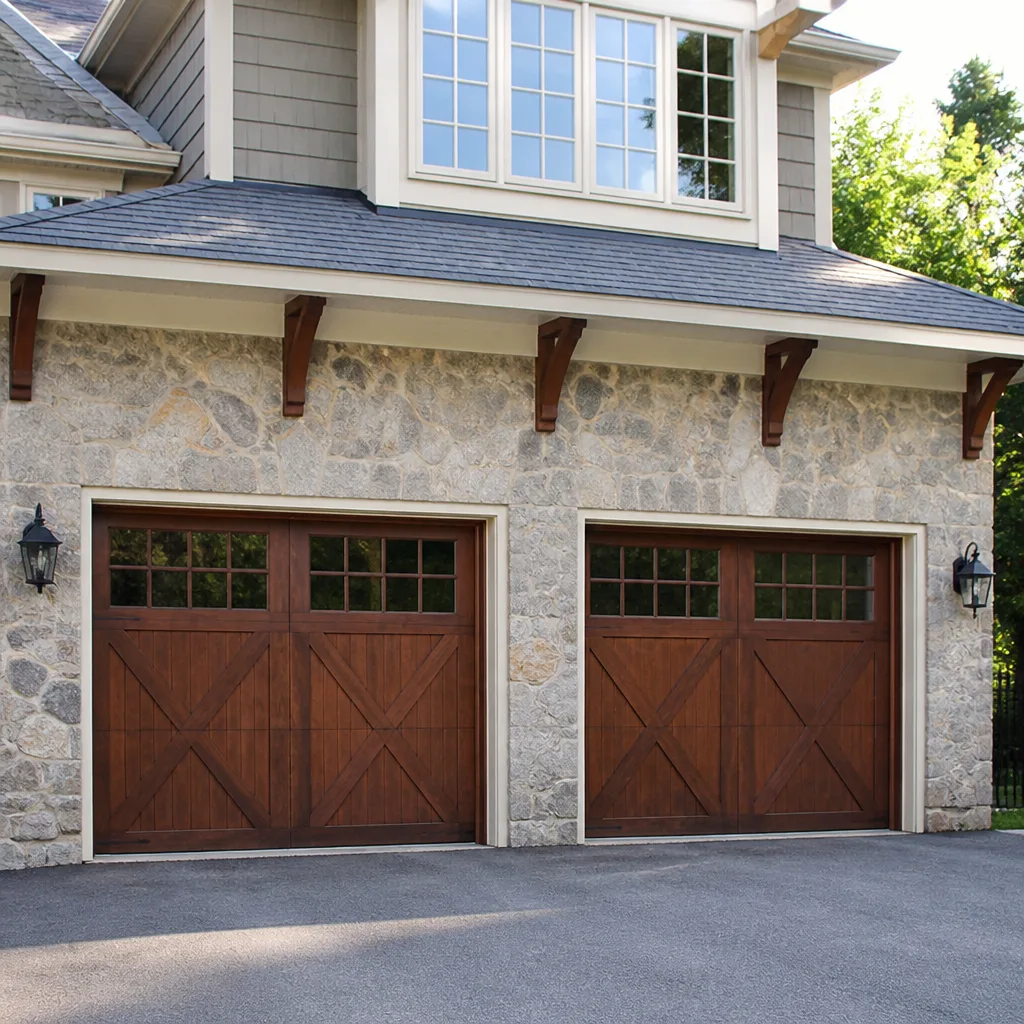 Carriage house
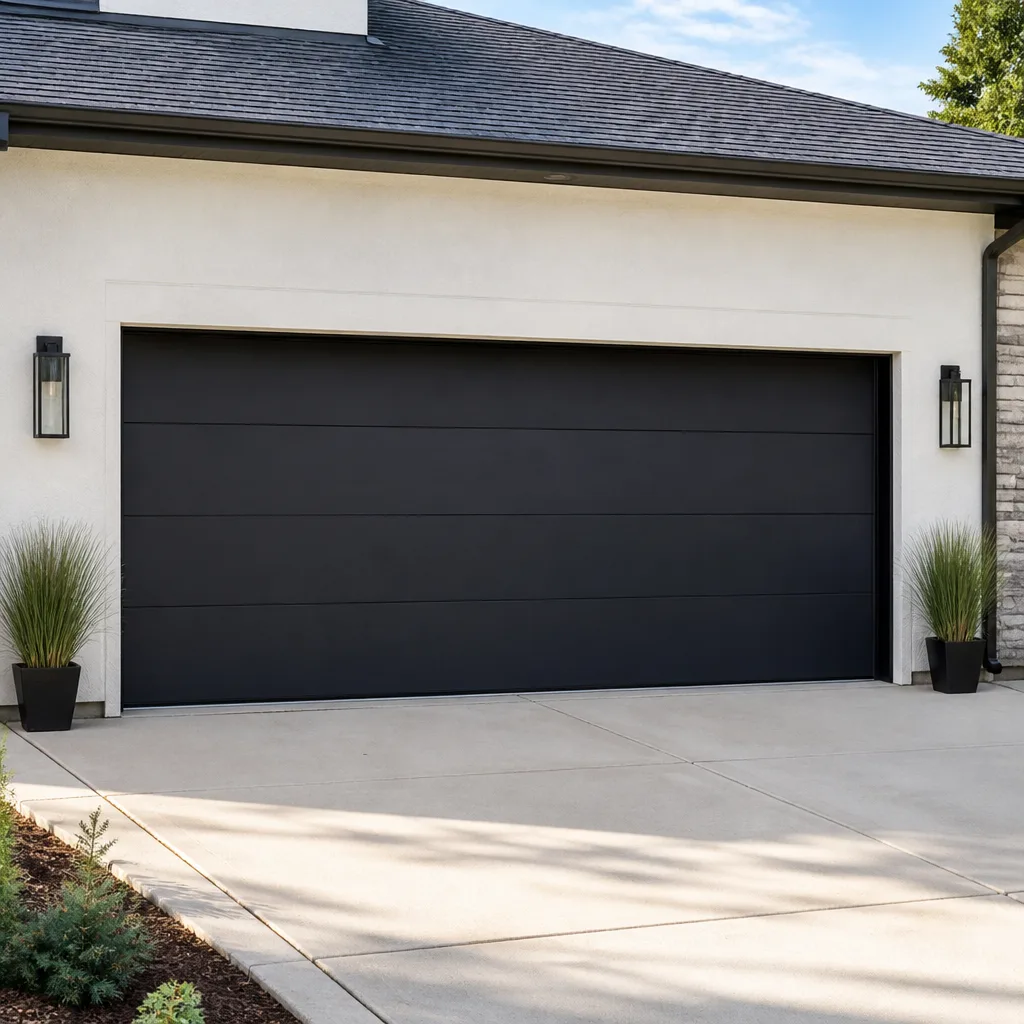 Modern flush
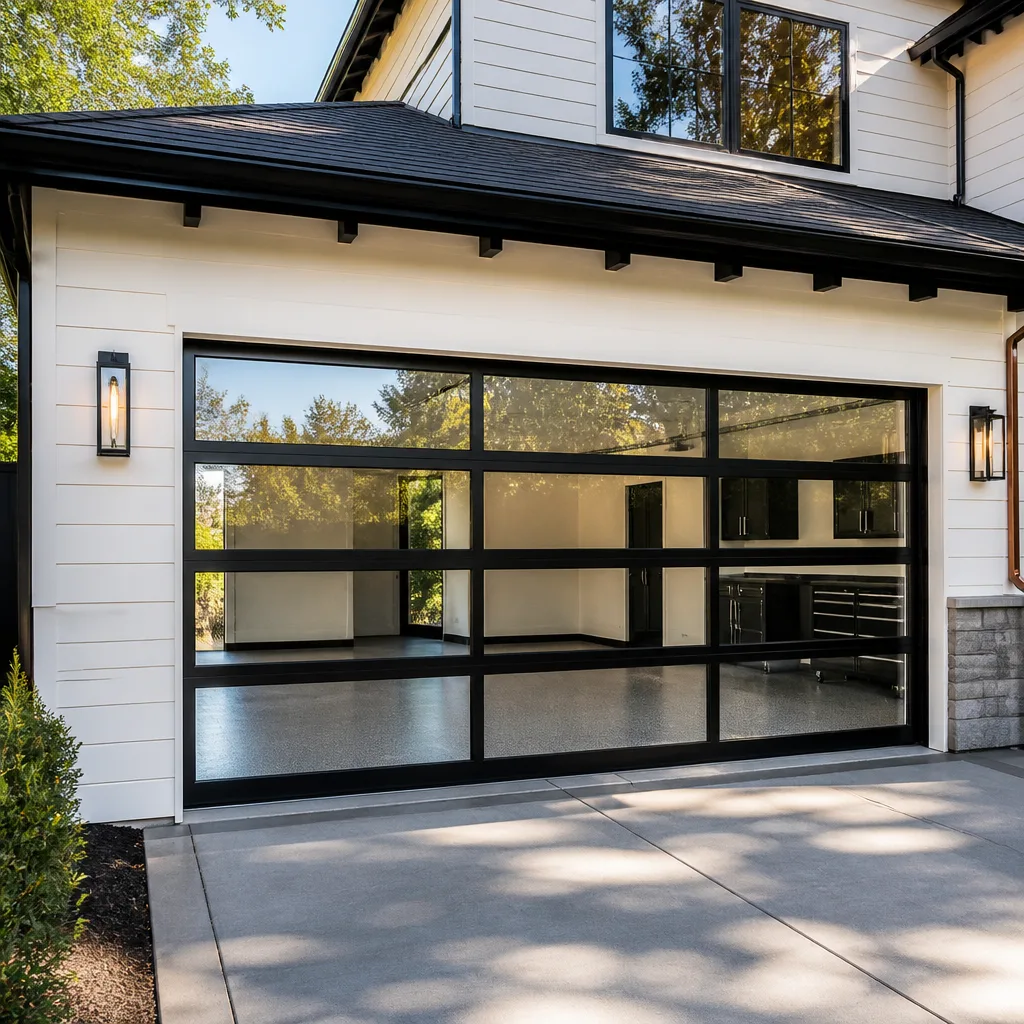 Full-view glass
 LiftMaster openers
 Chamberlain openers
Full 25-point door and opener safety check with every visit - springs, cables, rollers, tracks, and your LiftMaster or Chamberlain opener included
You get a price before we start. It does not change when the pro arrives.
Get your free estimateGarage Door Emergency Preparedness Guide for Elizabeth Homes
Most garage door emergencies don’t start with a bang. They start with a power cut, a snapped spring, or an opener that whines and gives up while your car sits inside. The counterintuitive part: the moment you need to know how your door works is exactly the moment you have the least time to learn. This guide covers the two failures that matter most in Elizabeth homes – doors that trap your car and doors that leave your home exposed – and walks through what to do before, during, and after. You’ll get a manual release procedure most instructions leave half-finished, temporary security steps, and the prep that quietly prevents emergencies.
Quick Answer
Garage door emergencies in Elizabeth fall into two types: a door that won’t open and traps your car, and a door that won’t close and leaves your home open to the street. For the first, use the manual release cord only after the door is fully closed and the spring tension is settled – never yank it on a half-open door. For the second, secure the opening temporarily and book a repair. High-tension springs and cables are not a homeowner job, and a licensed technician should handle anything involving spring tension.
Styles & brands we work with
- Raised-panel steel
- Carriage house
- Modern flush
- Full-view glass
- LiftMaster openers
- Chamberlain openers
Table of Contents
- The Two Kinds of Garage Door Emergency in Elizabeth
- How to Use the Manual Release Cord Safely
- When Your Door Fails in the Open Position
- Entering and Exiting When the Door Is Stuck Partway
- What to Tell the Technician on the Phone
- Pre-Emergency Prep Before Winter
- Why Springs and Cables Need a Professional
The Two Kinds of Garage Door Emergency in Elizabeth
We’ve talked with enough homeowners across Elizabeth to know that garage door emergencies fall into two distinct categories, and they need different responses. The first is the trap: the door won’t open, and your car, your work bag, your kid’s car seat are all on the wrong side of it. The second is the exposure: the door won’t close, or it hangs partway, and the opening between your garage and the street is no longer a closed door.
In Elizabeth, both failures show up more often during the cold months. The city’s housing stock runs from older two- and three-family homes in neighborhoods like Elmora and Peterstown to newer construction near the waterfront and along the North Avenue corridor, and the mix of door ages matters. Plenty of Elizabeth garages still carry the original wood-panel doors and chain-drive openers from decades past, and those systems fail differently than a newer belt-drive garage door opener repair platform.
Doors that trap your car
These usually trace to a bound spring, a dead opener motor, a stripped gear in the drive, or a snapped cable. The door is down, and the car is in.
Doors that compromise security
These are the ones homeowners call about late. A door that stops partway up, a door that reverses on the way down and won’t stay shut, or a door that’s been physically forced. The home sits open until it’s fixed.
Both are urgent in different ways. The trapped-car scenario is an inconvenience and a scheduling headache. The open-door scenario is a security problem, and that’s the one we tell Elizabeth homeowners to treat as the priority. Knowing which kind you’re facing is the first step in responding well.
How to Use the Manual Release Cord Safely
Every residential opener has a manual release cord – a red handle, usually, hanging from the trolley on the opener rail. Every Elizabeth homeowner should know where theirs is. Most don’t, and the first time they find it is the first time they need it.
The critical caution most instructions skip: pulling that cord releases the trolley from the door carriage, not the door from gravity. If the spring is broken or out of balance, the door’s weight is held only by whatever tension remains. Pull the release wrong and it can drop fast.
Step-by-step: manual release for a standard opener
- Stand clear of the door’s path. Confirm nothing and nobody is under the door panel.
- If the door is open or partway up, lower it fully by hand while the opener is still engaged, then let go and step back. Do not stand beneath a raised door with a suspected spring fault.
- Locate the red release cord on the trolley assembly on the opener rail.
- Grip the cord firmly and pull straight down, once, with steady pressure. Don’t yank.
- Lift the door by hand a few inches to test whether the weight feels normal. An unbalanced door will feel far heavier in one direction or won’t hold itself partway.
- If the door is balanced, lift it fully and prop it open – or leave it down and call for repair.
- If the door is unbalanced or the spring looks broken, close the door fully by hand and call a technician. Do not try to lift it further.
This works the same way on Chamberlain and Genie openers, which are among the most common we see in Elizabeth garages. The release cord sits on the trolley in the same basic spot. Newer smart openers from both brands sometimes have a lockout feature you’ll need to override from the wall control or app before the door will respond to anything.
One more note: after releasing the door manually, you’ll need to re-engage the trolley before the opener will run it again. That means pulling the release cord back the other way, or in some systems moving the door until the carriage re-latches. It’s a two-minute job when you know the sequence. It’s a frustration when you don’t.
When Your Door Fails in the Open Position
A door stuck open is the security failure, and it’s the one that needs your attention fastest. In Elizabeth, a garage opening facing an alley or a busy street is a visible invitation, especially overnight. Here’s the sequence we recommend until a technician arrives.
- Manually lower the door if safe. With the opener disengaged, lower the door by hand until it reaches the floor. If the door will not close fully, don’t force it – stop and move to the next step.
- Secure the interior side. If you can get into the garage through the house, brace the door from the inside with a heavy object or a temporary wood brace wedged between the bottom panel and the floor.
- Use a vehicle as a visual block. Park a car across the opening from the outside if you can, even temporarily. It sends a clear signal that the home isn’t empty.
- Lock the service door. If your garage has a walk-through door to the house or the yard, lock it, and move valuables out of the garage while the door is open.
- Notify neighbors if the opening is visible from the street. In the dense blocks around Elizabeth’s older residential neighborhoods, a quick word with a neighbor can be the difference between a secure night and a vulnerable one.
If the door won’t close because the opener’s safety sensor is misaligned – the two small lights near the floor on either side of the opening – that’s an easier fix than it looks. Check that neither lens is dirty, blocked, or knocked out of position. Sometimes that’s all it takes. If the sensor is dead or the door still reverses, it’s a repair call.
Entering and Exiting When the Door Is Stuck Partway
A door hanging partway up or down is the most awkward failure. You might be able to duck under it and get to your car, and you might not. The caution is simple: don’t treat a partially open door as stable. It isn’t. The panel could fall further if a spring is holding on by a thread.
If you need to get out of the garage
- Do not put your hands, head, or shoulders under the bottom panel to lift it if the opener isn’t responding.
- Use the walk-through door to the house or the yard if you have one. This is what it’s for.
- If the only exit is the main door, and the gap is high enough to clear your body with room to spare, move under it quickly and without touching the panel. If the gap is tight, don’t risk it.
- Call a technician before you try to reposition the door. A two-person attempt with an unbalanced door is how injuries happen.
If you need to get back in
Use a remote from outside if the opener is still live. If the opener isn’t responding, the manual release may let a helper inside lower the door for you, but only if the weight test in the section above passes. If it doesn’t, wait for the technician.
In our experience, the most common scenario in Elizabeth is a door that stops two or three feet up, with the car inside. If that’s what you’re looking at, secure the opening and call. If the door is fully down and you’re locked out of the garage but the car isn’t needed, that’s a scheduling call, not an emergency.
What to Tell the Technician on the Phone
The call goes faster and the truck arrives better prepared when the person on the phone has the right information. When you call for garage door repair in Elizabeth, have these details ready. It’s the difference between a first visit that fixes the problem and one that has to come back with parts.
- Door type and brand. Clopay, Amarr, and Wayne Dalton panels are common here. If it’s a Clopay steel door on a Chamberlain belt-drive opener, say so.
- Opener model. LiftMaster, Chamberlain, Genie, Craftsman, Raynor – the brand name alone helps, but the model number from the opener housing or the wall control is better.
- What the door is doing. Won’t move at all. Moves a little then stops. Reverses before the floor. Makes a grinding noise. Drops fast. Each symptom points to a different part.
- What you’ve already tried. Manual release, remote and wall-control testing, sensor check. Tell the technician what happened when you tried.
- How long the door has been doing it. A door that has worked for years and failed suddenly is a very different call than one that has gotten worse over weeks.
- Current position of the door. Fully closed, fully open, partway. If partway, roughly how many feet.
One more thing: mention whether the garage has anything unusual – a low ceiling, a very tight fit, or a very old door with no safe way to manually lift it. None of that changes the diagnosis, but it changes what a technician brings.
Pre-Emergency Prep Before Winter
Elizabeth winters don’t stay at one temperature. The area gets a mix of cold snaps, freeze-thaw cycles, and a handful of wet, heavy snowfalls in a season. That cycle is hard on garage doors: cold stiffens the lubricant, freeze-thaw cycles settle the tracks and shift the concrete at the floor, and a door that worked all fall can bind in January without warning.
Two prep tasks make the biggest difference.
1. Lubricate the moving metal parts
A garage door has rollers, hinges, and a torsion bar or extension spring setup. They need a garage-door-rated lubricant, not WD-40 or general-purpose oil. A dry silicone or lithium spray on the rollers, hinges, and spring coils before the cold sets in prevents the stiffness that leads to hard starting and strain on the opener motor. Place a drop on each roller and hinge pivot, work the door open and closed a couple of times, and you’re done. Most of the work is finding the spray can.
2. Test the door balance by hand
Disconnect the opener (pull the release cord with the door fully closed). Lift the door by hand to about halfway. A balanced door stays put. An unbalanced door drops, or runs heavily. If yours is unbalanced, that’s a spring problem developing and it’s better found in October than on the coldest night in January with your car inside.
If you can manage one more check, look at the bottom seal. A worn seal lets snowmelt and cold air under the door, and in freeze-thaw conditions the concrete at the threshold shifts. The seal is cheap and the repair is quick, but it’s a bigger job if you wait until you’re already calling about a frozen door.
Why Springs and Cables Need a Professional
Torsion and extension springs are under extreme stored tension. When a spring snaps, it lets go with dangerous force. Cables under tension can whip and cut. We don’t give step-by-step spring replacement instructions because they genuinely don’t belong in a homeowner’s toolbox, and any service that offers them is telling you more about their standards than their expertise.
If you suspect a spring or cable fault – a loud bang from the garage, a door that suddenly won’t lift, or a visible gap in a coil – stop using the door. Close it fully by hand if you safely can. Do not attempt to lift the door, and do not try to unwind or reposition the spring. Call a licensed technician for anything involving spring tension or a cable fault. Our technicians have up to 8 years of experience with the spring and cable systems we work on, and that experience is exactly what keeps the job safe.
The same caution applies to opener wiring and to the track system. A door that has come off its track is unstable, and moving it can twist the panels or cause the door to fall. Leave it where it is and call.
Common Mistakes to Avoid
- Yanking the release cord on a door that’s still partly raised. The trolley releases but the door’s weight is still held by the spring. Lower the door first, then release. And never release a door that’s currently open if the spring has failed.
- Trying to force a stuck door by lifting under the bottom panel. A door that’s off-track or has a broken spring is a lever waiting to hurt somebody. Leave the door as it sits and call.
- Using the opener repeatedly after the first failure. If the motor is grinding or the door reverses, running it again and again can strip the drive gear or damage the opener’s control board. Once is enough to know it’s failing.
- Leaving a failed-open door open overnight without securing it. A door stuck in the open position is not the same as a closed door in a locked house. Treat the opening like an unlocked front door until it’s repaired.
- Skipping the pre-winter lube because the door “seems fine.” Doors don’t announce a bound roller. They fail on the morning you need them most, and that’s usually a cold one.
- Overriding the safety sensors to make the door close. The two sensor lights at the floor are the door’s only protection against closing on a person or pet. If the sensor is broken, that’s a repair – not a wire to bypass.
- Calling around for the lowest price without telling the technician what the door is doing. Nobody can quote a spring repair by phone without knowing what’s actually broken. The on-site estimate is the one that matters.
See the difference
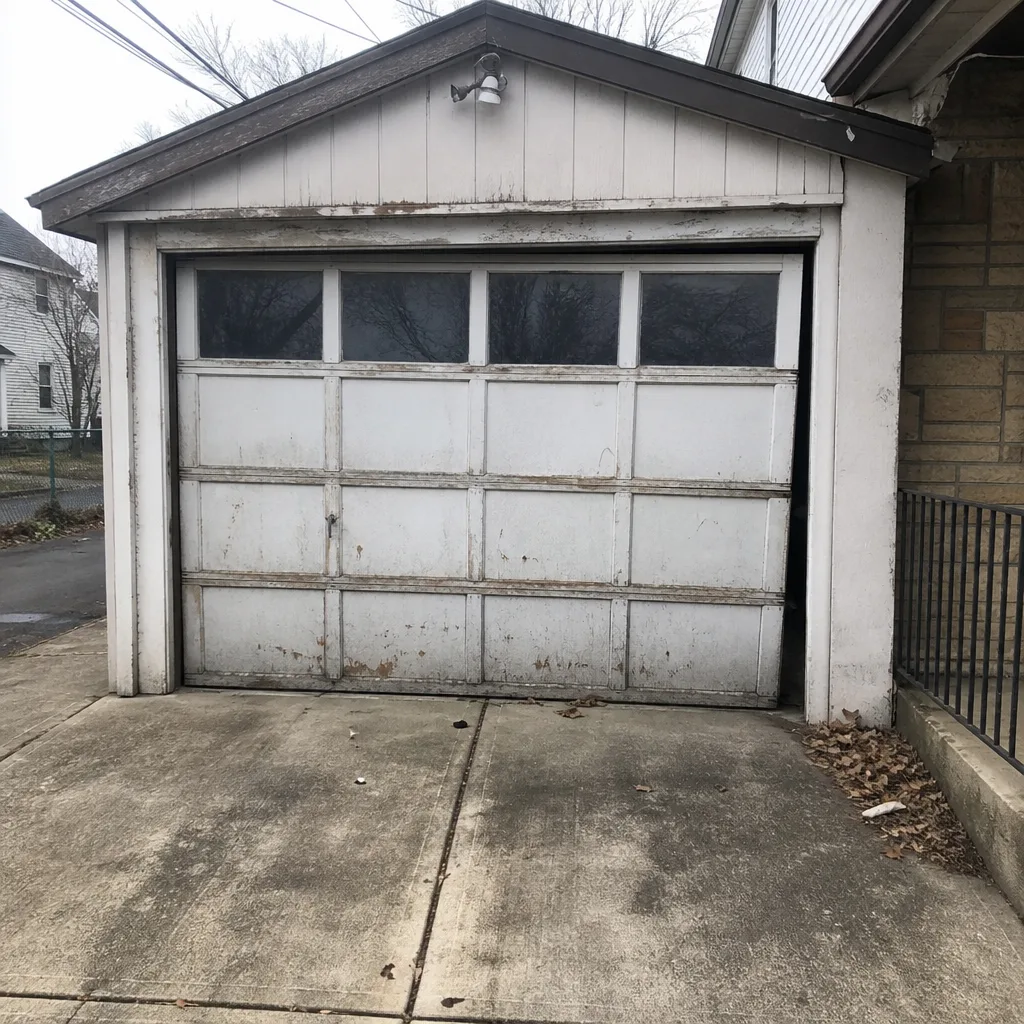 Before
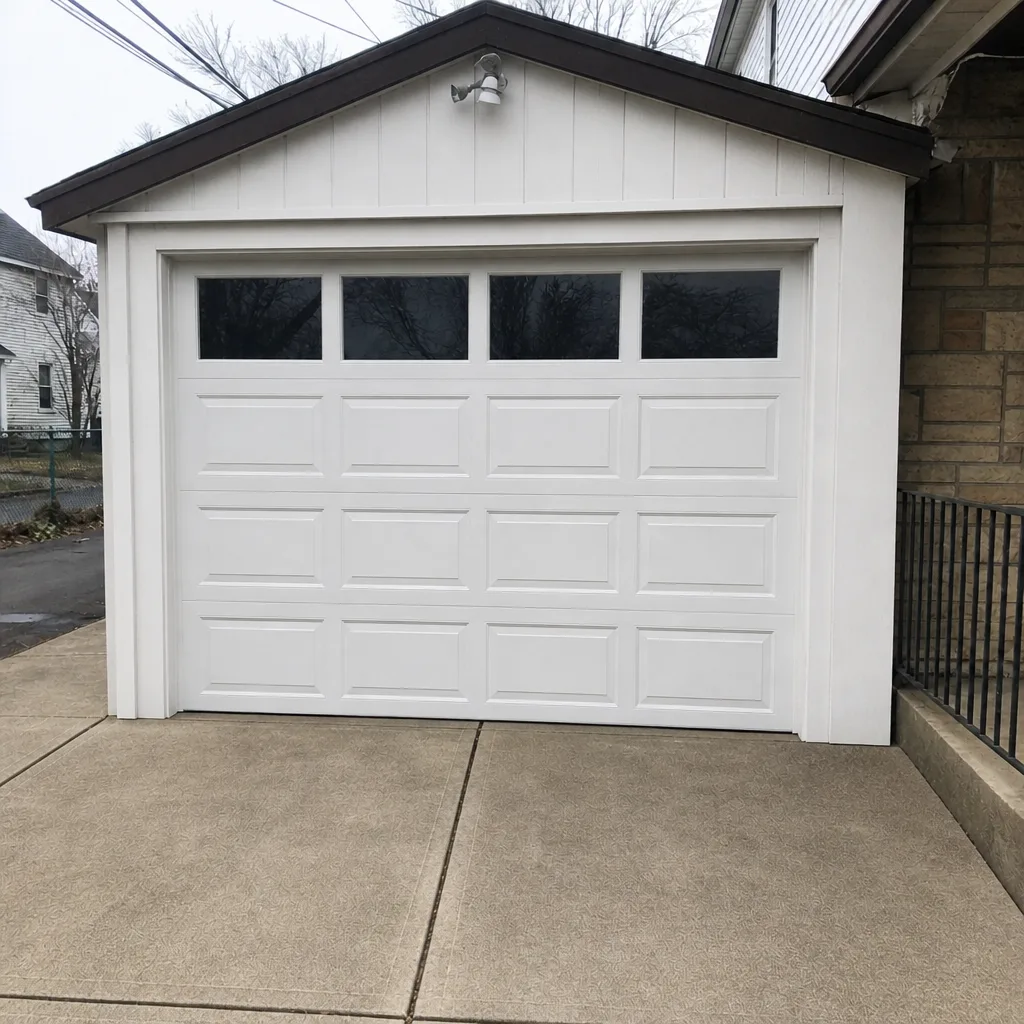 After
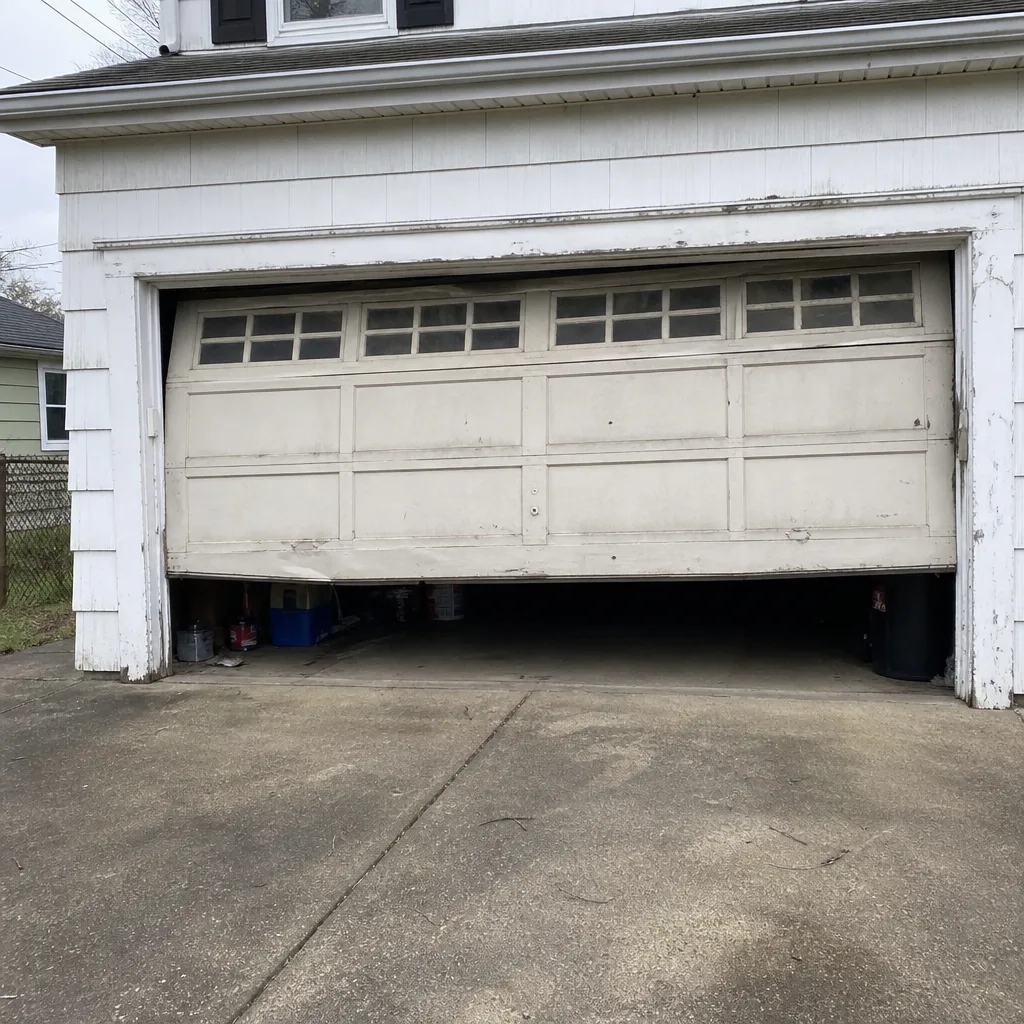 Before
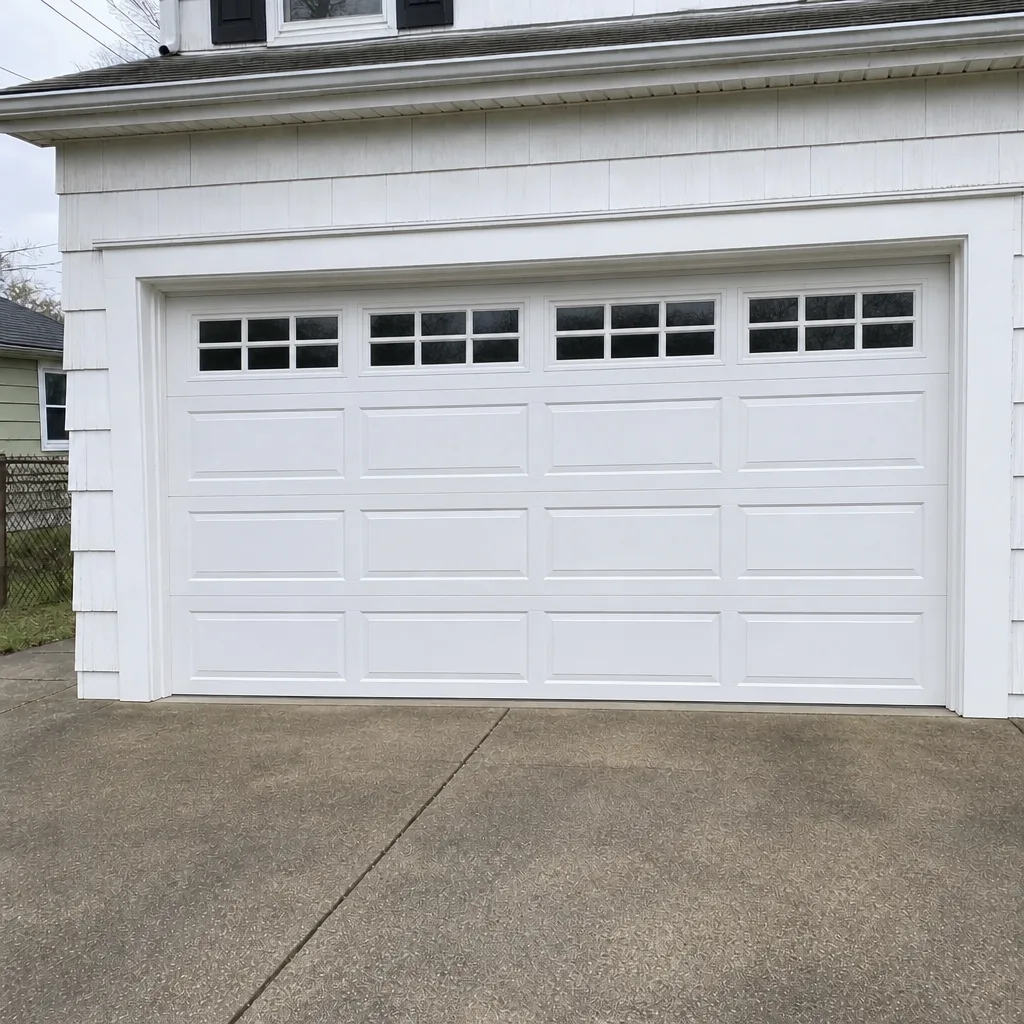 After
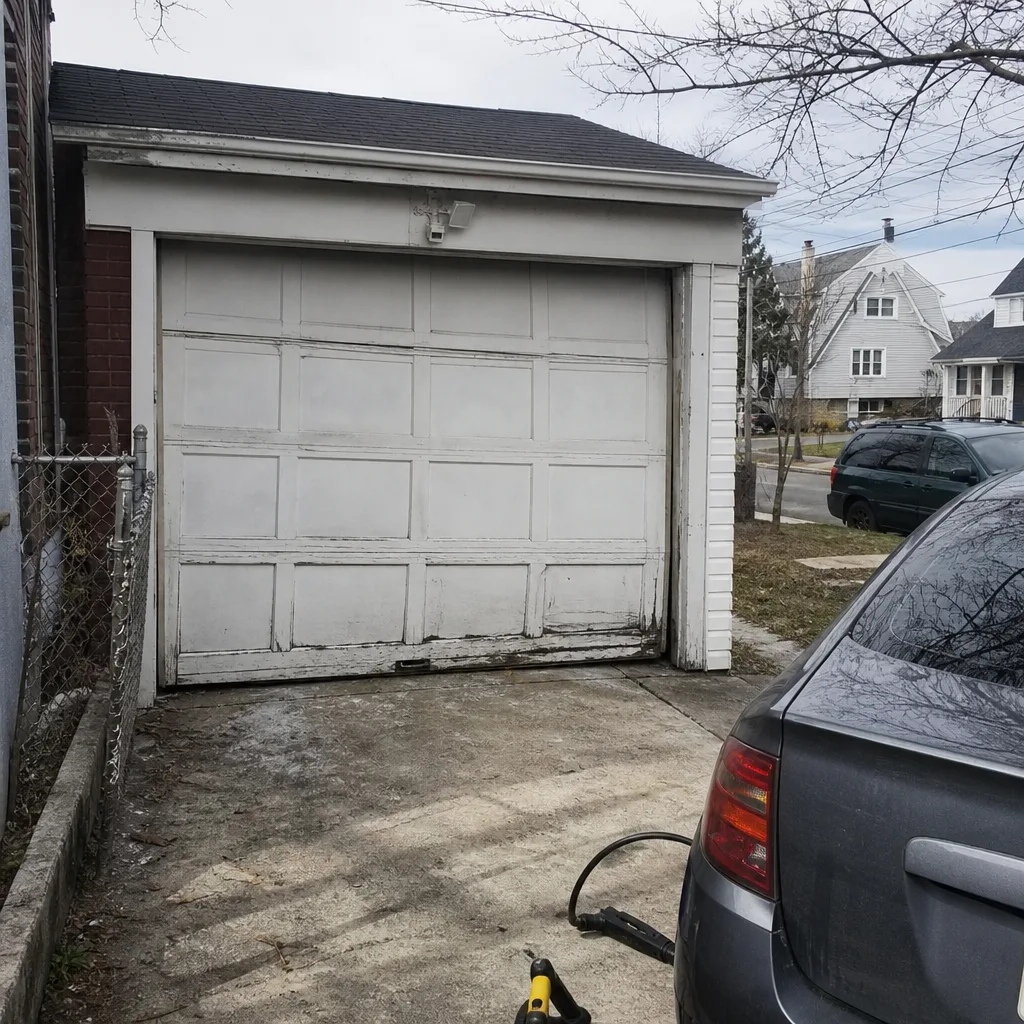 Before
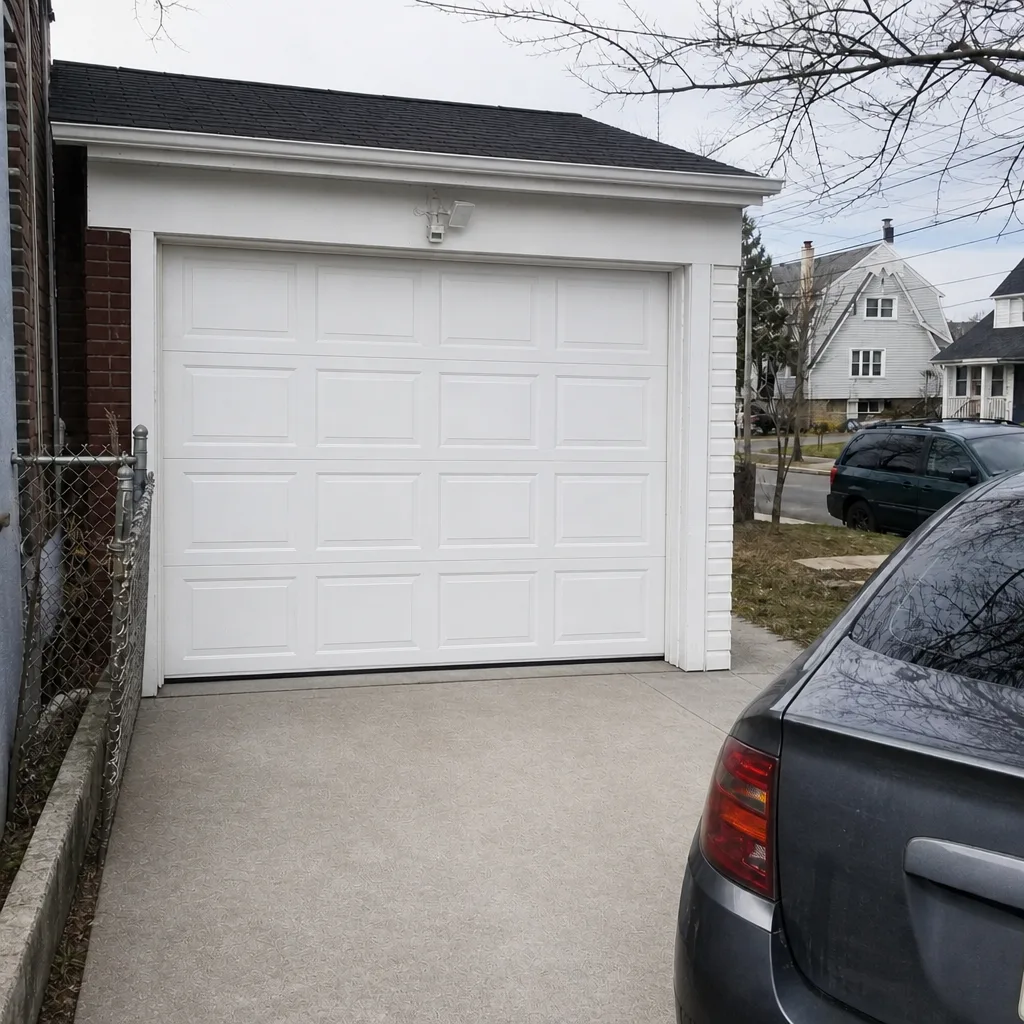 After
When to Call a Professional
Some garage door problems are small. A remote with a dead battery. A sensor with a leaf in front of it. A door that sticks a little in cold weather and works after a second push. Those can wait, and you can usually sort them yourself. The rest shouldn’t. Call a professional if the door won’t lift at all, if a spring has visibly snapped, if the door has come off its track, if you hear a loud bang from the garage, or if the door reverses repeatedly and you can’t find an obstruction or a misaligned sensor.
If your door is stuck open or only partly closed, don’t wait until it’s convenient. That’s the one failure we treat as urgent. Hartwell Garage Door Repair offers free estimates in Elizabeth. Call (833) 946-9108. We answer 24/7. Fast dispatch from 7am to 7pm, Sunday through Friday. Every price is quoted and agreed before any work starts, and the written estimate sets the final price.
Frequently Asked Questions
First confirm the opener has power and that the wall control or remote is working – dead batteries and tripped breakers cause more “stuck doors” than anything else. If the opener runs but the door doesn’t move, stop and call; that usually points to a stripped gear or a spring failure. If the power is out, use the manual release cord, but only after lowering the door to the floor and checking the balance first. Call (833) 946-9108 for an exact quote – estimates are free.
Yes, with one condition: the door must be fully closed and its spring tension settled before you pull. On a door that’s raised or partway up with a suspected spring fault, pulling the release can let the door drop. Lower it by hand first, confirm the weight feels normal, then release the trolley. If the door is heavy or won’t hold itself partway up, don’t use it – call for repair.
There’s no single number because the cause drives the price. A sensor misalignment is a quick fix; a broken torsion spring or a snapped cable is a bigger job. We quote per job, in writing, before any work starts, and the price you agree to is the price we bill. For an exact figure on your door, call (833) 946-9108 – free estimates, and we’ll tell you what needs doing before you agree to anything.
Same-day dispatch is available and a door that’s left your home open is the priority we treat as most urgent. Call and tell us the door is open and whether it’s visible from the street. We answer 24/7. Fast dispatch from 7am to 7pm, Sunday through Friday. In the meantime, lower the door by hand if you safely can, or brace it from the inside and keep the service door locked.
Not without your agreement. The written estimate we give after looking at the door is the price. If we find a second issue – a worn cable alongside a broken spring, for example – we’ll explain it and offer a new estimate, and you decide whether to proceed. The price is always quoted and agreed before work starts, and we don’t add charges after the fact.
Our technicians are experienced and work on the eight major brands – LiftMaster, Chamberlain, Genie, Clopay, Amarr, Wayne Dalton, Craftsman, and Raynor – so they arrive knowing the system in your garage. They’re qualified to handle spring, cable, opener, and track work, and we carry the coverage a residential repair company should. Hartwell is a local, named business, not a national franchise or a dispatch referral service, so the technician you book is the one who does the work.
The Bottom Line
Garage door emergencies in Elizabeth come in two flavors – the trap and the exposure – and both get easier when you’ve thought about them beforehand. Know where your manual release cord is, and know not to pull it on a raised door with a suspect spring. Secure the opening the moment a door fails open, and keep the walk-through door locked. Lubricate the moving metal before winter and test the balance by hand while the weather is still mild. Then leave the springs and cables alone. Call for Hartwell Garage Door Repair before you try to force a door that won’t move. That one decision covers most of the risk.
When something does go wrong, have the brand, model, symptom, and door position ready before you call. Our technicians have up to 8 years of experience across the eight brands we service, and they’ll tell you what’s actually broken, not what’s easiest to sell. For a free estimate, call (833) 946-9108. We answer 24/7. Fast dispatch from 7am to 7pm, Sunday through Friday.
Written by the team at Hartwell Garage Door Repair.